
Defibrillator
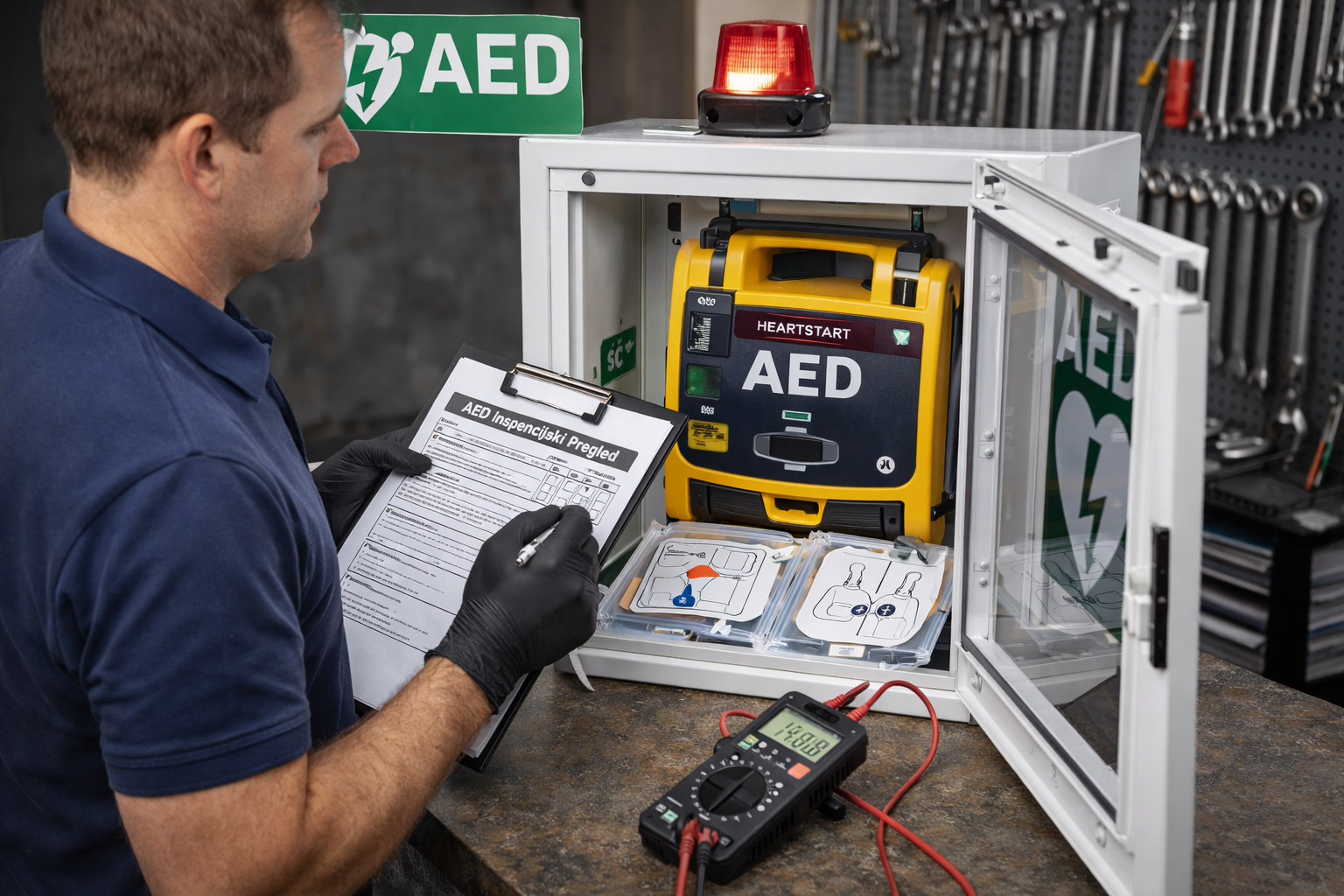
We conduct inventories of defibrillators and their equipment.
An AED is portable, reliable, and easy to use. The device is lightweight, compact, and designed to enable individuals without prior medical knowledge to assist in emergencies.
ADD AED TO DATABASE →
Did you know that ...
- More than 300,000 people experience an out-of-hospital cardiac arrest in Europe every year — an average of more than 800 a day. Source: European Resuscitation Council (ERC)
- Approximately 70% of out-of-hospital cardiac arrests in Europe occur at home or in private residences. Knowing how to perform CPR could help you save the life of someone close to you. Source: ERC, 2025
- Cardiac arrest is often associated with heart disease, but it can also be caused by other life-threatening conditions, such as severe bleeding, choking, drowning or a severe allergic reaction — anaphylaxis. Source: Guidelines on special causes of cardiac arrest
- Every minute counts during cardiac arrest. Immediate cardiopulmonary resuscitation (CPR) and early use of an automated external defibrillator (AED) significantly improve the chances of survival. Source: ERC, 2025
- According to European data summarised in the ERC Guidelines 2025, approximately 7.5% of people survive an out-of-hospital cardiac arrest. Survival rates vary considerably between countries and depending on the circumstances. Source: ERC, 2025
- Without CPR and defibrillator use, the chances of survival decrease rapidly with every passing minute. An approximate decrease of 10% per minute is commonly cited in public awareness materials; the actual decline depends on the circumstances and heart rhythm. Source: Resuscitation Council UK
- CPR helps maintain the flow of blood and oxygen to the brain and other vital organs. This buys valuable time until further help arrives. Source: Resuscitation Council UK
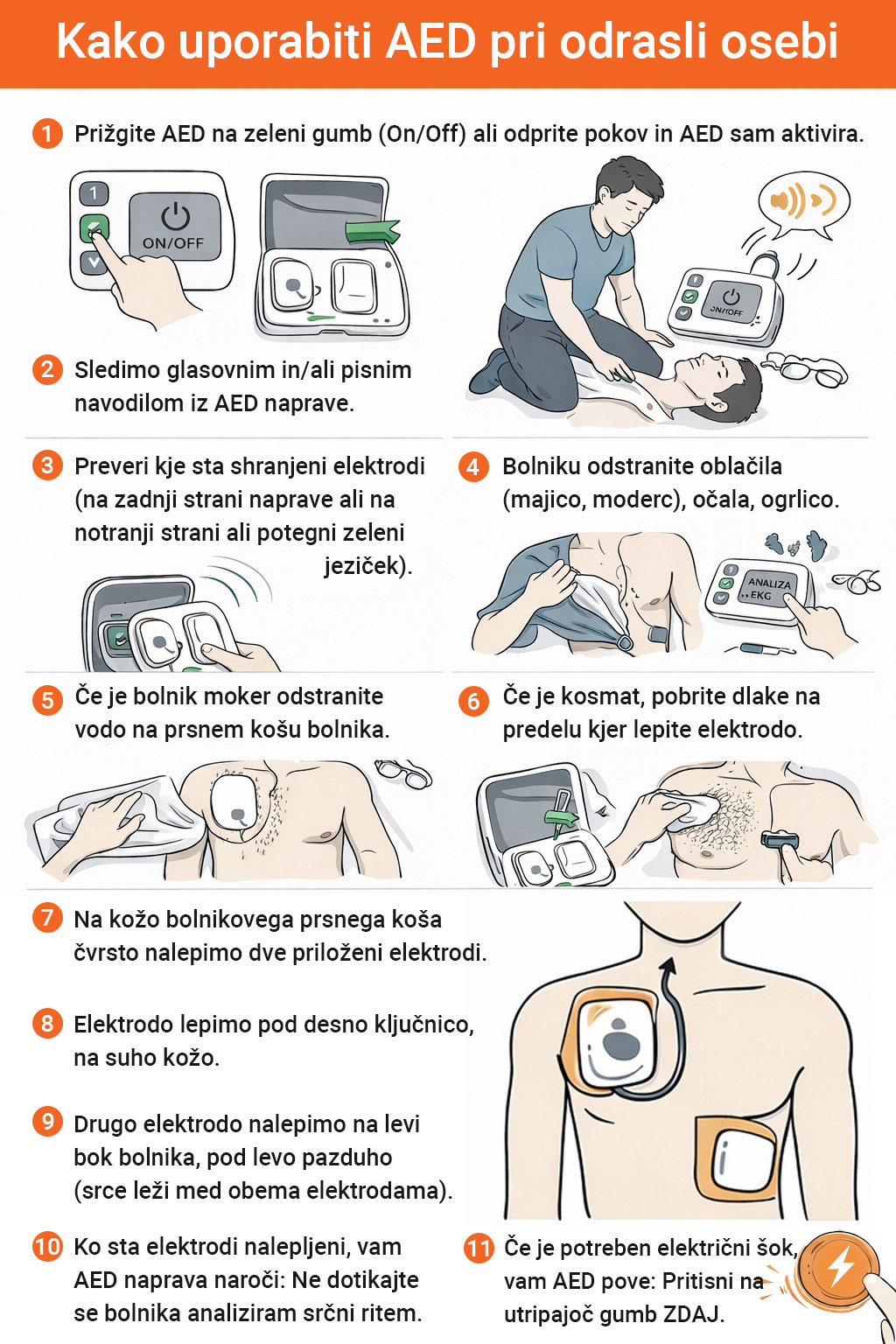
- Anyone can use an AED, even without prior training. The device guides the user with instructions, analyses the heart rhythm and only allows an electrical shock when it is needed. Source: ERC, 2025
- Emergency medical services may take several minutes to arrive, and response times vary across Europe. Immediate help from bystanders is therefore crucial: do not wait for emergency medical services to arrive before starting CPR. Source: ERC, 2025
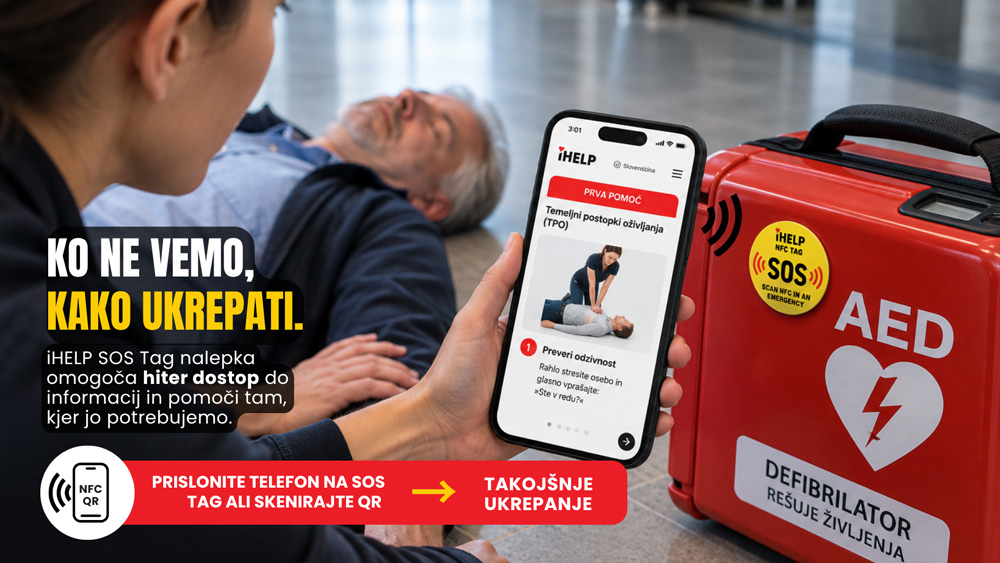
Equip the AED with an iHELP SOS Tag sticker or card:
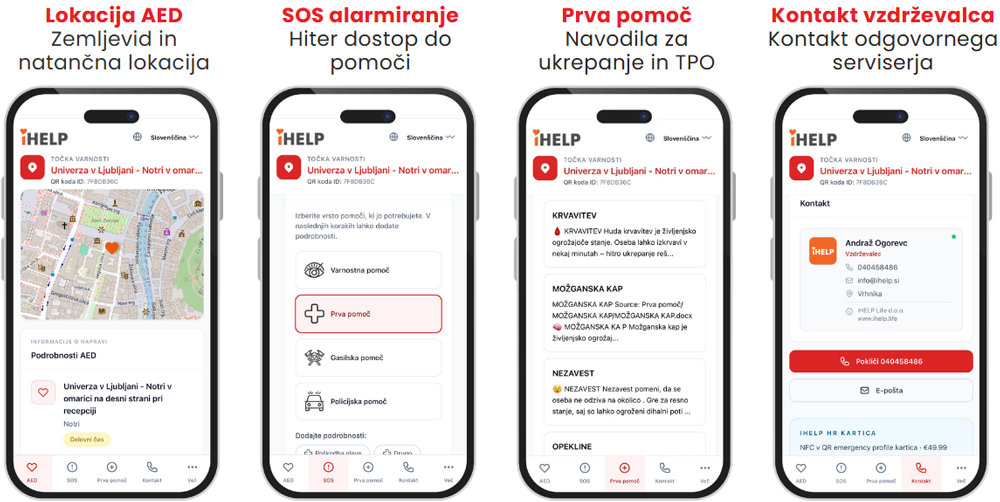
- Quick access to first aid instructions.
- CPR and AED usage guide.
- SOS alerting system.
- Digital service logbook.
- Equipment functionality checks.
- Expiration notifications for pads and batteries, as well as reminders for technical inspections and servicing.
- Contact details of the responsible technician or maintenance provider.

ORDER SOS STICKER / CARD →
Act immediately
If the person is unresponsive, call 112 immediately and turn on the speakerphone. If they are not breathing normally, start CPR and follow the dispatcher's instructions.
If someone else is present, have them fetch the AED. Turn it on as soon as possible and follow its voice prompts. Do not wait for the paramedics to arrive before you start taking action.

SUDDEN CARDIAC ARREST
Sudden cardiac arrest can happen to anyone, anywhere, at any time. When it occurs, the rapid use of an Automated External Defibrillator (AED) can mean the difference between life and death.
An AED is portable, reliable, and easy to use. The device is lightweight, compact, and designed to enable individuals without prior medical knowledge to assist in emergencies.
Saving Lives Together
Social Responsibility.
Building a defibrillator network plays a critical role in saving lives. In local environments, a vital role is played by compassionate individuals like you – people who are willing to go the extra mile for their community. You understand the challenges around you and actively seek the most effective solutions to address them.
With your support, we are building a safer community together – anywhere, anytime.